Tennis nutrition: what changes when there is no weight class
By Oleksandr Foka — sports nutritionist. Works on the WTA tour with Elina Svitolina and with professional combat sports athletes. Has also worked with Jelena Ostapenko and Sergiy Stakhovsky.
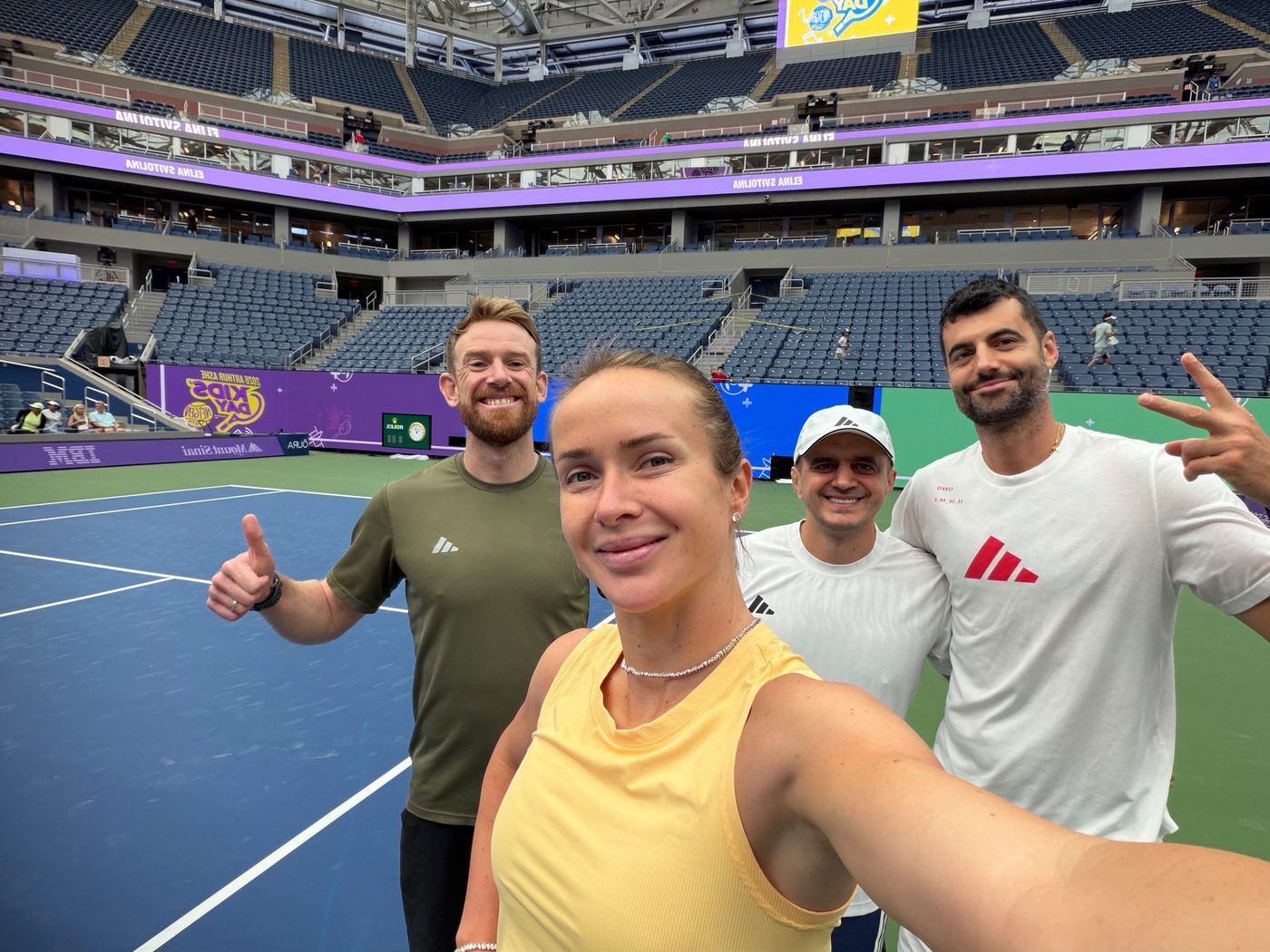
Arthur Ashe Stadium, US Open 2026
Most of my work is in combat sport, where the whole nutritional year bends around one number on one morning. Tennis has no such number. It took me a while to understand that this makes the job harder rather than easier.
A fighter knows the weight, the date and the length of the contest. Three rounds or 12, the finish line is drawn before anyone walks out. Every decision about food follows from those three fixed points.
A tennis player has none of them.
Three things that are missing
There is no weight class, so there is no cut. That removes the most dangerous part of my usual work and replaces it with a subtler one: body composition still matters for movement and for load on the joints, but nothing forces the conversation. In combat sport the scale forces it once per camp. In tennis it can be avoided for years.
There is no fixed duration. A match can finish in 58 minutes or run past 4 hours, and the player does not find out which until it happens. You cannot fuel to a finish line you cannot see, so you fuel to keep the option open, which is a different calculation and a more expensive one.
And there is no fixed start. This is the one that surprises people who have not worked a tournament. On an outside court you are scheduled behind other matches, and the standard advice to eat 3 hours before the start assumes you know when the start is.
The practical consequence
In a fight camp the errors are made in the weeks before. In a tournament they are made on the day, in a corridor, while the schedule moves.
What carries over
More than I expected. Heat is heat, and the physiology of playing in it is the same physiology as fighting in it. Recovery between matches on consecutive days is the same problem as recovery between sessions in a heavy training block, run at higher stakes. Travel across time zones does the same thing to appetite and sleep whether the destination is a Grand Slam or a title fight.
Cramping carries over too, including the mythology attached to it. The tennis market for electrolyte products is large and the claims made in it are mostly the same claims made in combat sport, resting on the same absent evidence.
What is written here
This section covers the tennis-specific problems, starting with the one nobody has set out properly: how to eat before a match when the start time keeps moving. The rest of the site is combat sport, and a good deal of it applies here without translation.
In this section
Guide · $29
Junior Tennis: A Parent's Guide
Written for the adult. The ordinary week where the deficit is built, the tournament day, what to say and what not to, and the conversation that is not yours. 7 pages.
The numbers behind the tennis articles: carbohydrate by body mass, fluid and sodium by conditions, the 10-minute heat break minute by minute, recovery between matches, and a supplement list with elemental doses. 8 pages.
The one sport here with no weigh-in, which is exactly why nothing forces a player to plan. A tournament week, a day whose start time nobody knows, and the 2026 heat rule nobody has written instructions for.
Two complete sample documents are free to read before you buy anything.
Free checklist
The tournament day: 20 items, decided the night before
What to pack, how to eat when the start time keeps moving, what to do inside a heat break, and the gap between matches that everybody wastes. Three pages, sent the moment you enter your email. You will also hear from me when something changes that actually affects players, and at no other time.
No schedule, no marketing. Reply to any email to come off the list. See the privacy notice.